&geometry(179x90) "A&G The Road Cleaners")
Commercial Plowing and Salting Services: A Complete Guide for Ontario Properties
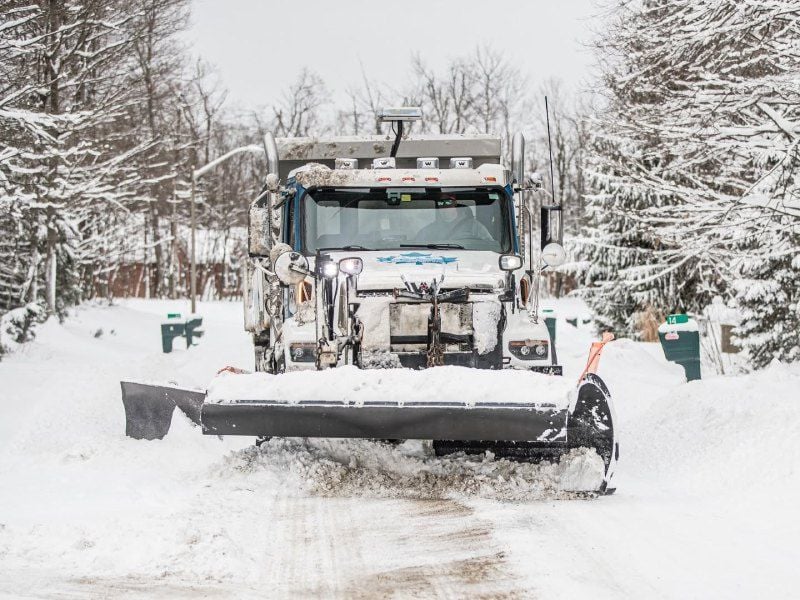 "Commercial Plowing and Salting Services: A Complete Guide for Ontario Properties")
December marks the point when winter maintenance becomes a daily operational concern for property managers, contractors and municipalities across Ontario. A clear forecast in the morning can give way to snow by the afternoon, while melting snow can refreeze after sunset and create slippery conditions long after a storm has ended.
Managing these conditions requires more than pushing snow to the edge of a road or parking lot. Effective winter maintenance combines commercial snow plowing with properly timed salting, ongoing monitoring and a clear plan for keeping priority areas accessible.
Plowing and salting perform different but complementary jobs. Plowing removes accumulated snow from the surface. Salting helps prevent ice from bonding to pavement and assists with melting remaining snow and ice when conditions allow. Used together, these services provide a more complete response than either one can provide alone.
Professional municipal and commercial snow plowing and salting may be needed on municipal roads, retail parking lots, industrial yards, distribution centres, construction sites, multi-residential properties and other paved areas. The service plan should reflect the size and use of the property, traffic levels, operating hours, weather conditions and the areas that must remain accessible.
This guide explains how commercial plowing and salting services work, why timing matters and what Ontario property managers should consider when planning winter maintenance.
Why Plowing and Salting Should Be Planned Together
It is easy to think of snow plowing as the main winter service and salting as an optional finishing step. In practice, each service addresses a different part of the winter weather problem.
Snow plowing physically moves accumulated snow from driving and parking surfaces. It restores usable space, opens traffic lanes and reduces the depth of snow that vehicles and pedestrians must travel through. However, a plow cannot always remove every trace of compacted snow or ice from the pavement.
Salting helps address the material that remains. When applied at an appropriate time and rate, salt can lower the freezing point of water, weaken the bond between snow or ice and the pavement, and make subsequent plowing more effective. It can also help manage thin layers of ice created by freezing rain, refreezing meltwater or compacted snow.
A coordinated service may include treatment before a forecast event, plowing during accumulating snow, salting after a plow pass and follow-up inspection when temperatures or site conditions change.
The sequence matters. Applying salt and then allowing a heavy accumulation of snow to remain on the pavement may not produce the desired result. Plowing a property but ignoring remaining ice can leave hazardous patches in traffic lanes, at entrances or around pedestrian areas.
The objective is not simply to make the pavement look clear. It is to keep the property functional and manage changing surface conditions throughout the weather event.
What Commercial Snow Plowing Includes
Commercial snow plowing removes snow from roads, parking lots, truck yards and other paved areas using equipment selected for the size and layout of the site.
Depending on the property, the service may involve:
Opening main entrances and exits
Clearing primary vehicle lanes
Plowing parking rows and loading areas
Maintaining emergency access routes
Clearing roads within industrial or multi-residential properties
Creating access to loading docks, service areas and waste enclosures
Reopening areas affected by drifting or continued snowfall
Moving accumulated snow to approved onsite storage locations
Loading and hauling snow away when onsite space becomes limited
The first pass during a major storm may focus on keeping critical routes open rather than producing a finished, curb-to-curb result. Additional passes may be needed as snowfall continues, traffic decreases or parked vehicles are moved.
The final cleanup often occurs after the storm has ended. Crews can widen lanes, reclaim parking spaces, clear remaining windrows and address areas that could not be reached during active operations.
This staged approach is particularly important at hospitals, industrial facilities, logistics properties, municipal sites and 24-hour businesses that cannot simply close while snow accumulates.
What Commercial Salting Services Include
Commercial salting involves applying de-icing material to paved surfaces to help manage snow and ice. The service may be performed before, during or after a winter weather event, depending on the forecast, pavement temperature and property requirements.
Road salting services can support several winter maintenance goals:
Reducing the opportunity for snow and ice to bond strongly to pavement
Improving the effectiveness of later plowing
Treating residual snow after a plow pass
Managing icy patches created by compacted traffic
Responding to freezing rain or flash-freeze conditions
Treating runoff that freezes near drains, snow piles or low areas
Providing follow-up treatment when overnight temperatures drop
Salting is not the same as simply spreading as much material as possible. Application should be based on the weather, surface conditions, expected traffic and the type of area being treated.
Some sites may also use sand or a salt-and-sand mixture where additional traction is needed. Sand does not melt ice in the same way as salt, but it can provide temporary grip in suitable situations. The appropriate material and method should be determined according to the site and conditions.
The Difference Between Anti-Icing and De-Icing
Salting can be used preventatively or reactively. Understanding this distinction helps explain why a winter crew may attend a property before snow begins.
Anti-Icing Before a Storm
Anti-icing is a preventative treatment applied before snow or ice has bonded to the pavement. Depending on the service plan, weather and site, this may involve pre-salting, pre-wetting or another approved treatment.
The goal is to create a barrier that makes it more difficult for frozen precipitation to adhere firmly to the surface. When successful, the snow may be easier to plow and less compacted material may remain afterward.
Preventative treatment is not appropriate in every situation. Rain before snow, rapidly changing forecasts or unsuitable temperatures can affect the decision. A professional service provider evaluates the timing and conditions instead of relying on a single automatic response to every forecast.
De-Icing During or After a Storm
De-icing is the treatment of snow or ice already present on the pavement. It may be completed after plowing to loosen thin remaining layers, address refrozen moisture or improve conditions in areas where mechanical equipment cannot remove everything.
Follow-up inspections are important because a surface that appears wet in the afternoon may become icy when the temperature falls. Meltwater can also travel from a snow pile or elevated part of a property to a shaded or low-lying section, creating a new problem after the original storm has passed.
What Happens Before Snow Begins?
Good winter maintenance begins before the first plow is dispatched. The property should be assessed and a site plan established before winter conditions make curbs, islands, drains and pavement markings difficult to see.
A preseason assessment may identify:
Property boundaries and plowing limits
Main entrances and traffic routes
Fire routes and emergency access points
Loading docks and delivery schedules
Catch basins and drainage paths
Curbs, speed bumps, medians and raised islands
Accessible parking spaces and access aisles
Areas with limited equipment clearance
Approved snow storage zones
Areas where snow must not be piled
Surfaces that may require a particular treatment
Onsite contacts and escalation procedures
Markers may be installed where appropriate to identify curbs, obstacles or site limits. Property managers should also confirm who is responsible for moving vehicles, opening gates and keeping storage areas free of equipment or materials.
Before a forecast event, the provider monitors expected precipitation, timing and temperatures. Crews and equipment can then be scheduled according to the properties they need to serve and the priority requirements established in advance.
How Plowing and Salting Work During a Winter Event
A winter storm is not a single moment. Conditions can develop over many hours, and a service plan may need to change as the event progresses.
Initial Treatment
Where conditions support it, an initial salt application may be used before accumulation. This can help reduce bonding and prepare the pavement for plowing.
High-priority areas may be treated first, including main entrances, ramps, loading approaches, intersections and other locations where vehicles must brake, turn or climb.
Opening Passes
Once snow reaches the service trigger set out in the maintenance plan, plows may begin opening essential routes. During continued snowfall, the goal is often to preserve access rather than complete the final cleanup.
At a commercial property, this may mean maintaining the main driveway and a central travel lane. At an industrial yard, the priority may be gate lanes, loading docks and truck routes. Municipal work may focus on designated roads and routes according to the applicable service plan.
Repeat Plowing
Long-duration or heavy snowfall may require repeated passes. Without interim plowing, snow can become deeply compacted by traffic, take longer to clear and occupy more storage space when finally moved.
Repeat service can also address drifting, windrows and snow deposited by vehicles or adjacent operations.
Post-Plow Salting
After the majority of snow has been removed, salt can be applied to remaining film, compacted areas and developing ice. This treatment works more efficiently when it is not expected to melt a deep layer of snow.
The amount and placement of material should reflect the actual surface conditions. Ramps, shaded lanes and high-traffic turning areas may need different attention from an open section of parking lot exposed to sunlight.
Final Cleanup and Monitoring
When the storm ends and the property becomes accessible, crews may return for detail work. This can include widening lanes, clearing additional parking spaces, cleaning around loading areas and moving windrows that interfere with access.
Monitoring may continue after the final plow. Falling temperatures, blowing snow and runoff from snow piles can create new icy areas several hours later.
Which Areas Should Be Cleared First?
Priority areas should be agreed upon before winter. If every portion of a large property is described as the first priority, the plan provides little practical direction during a fast-moving storm.
For many commercial and industrial sites, the usual priorities include:
Emergency and fire access routes
Main entrances and exits
Primary internal traffic lanes
Ramps, hills and turning areas
Loading docks and active delivery routes
Accessible parking and access areas
Employee and customer parking sections
Secondary roads, overflow parking and low-use areas
The order may differ according to the facility. A distribution centre operating overnight may prioritize truck gates and loading aprons. A retail property opening in the morning may focus on customer entrances, parking lanes and delivery access. A construction site may need its haul road and equipment access maintained before other sections.
The site plan should also distinguish between vehicle areas and pedestrian areas. Large plowing and salting equipment is designed primarily for roads and parking surfaces. Sidewalks, stairs and building entrances may require separate equipment, handwork or a different service provider, depending on the contract.
Parking Lot Snow Plowing and Salting
Commercial parking lots present challenges that do not exist on an open road. Parked vehicles, shopping carts, landscaped islands, curbs and changing traffic patterns can limit the path of equipment.
An effective parking lot plan considers how the property operates during a storm. If possible, sections can be cleared while they are empty and reopened as other areas are serviced. Employees, tenants or security teams may help coordinate vehicle movement so the plow can reach spaces that were blocked during the first visit.
Snow should be stacked where it does not obstruct:
Driver sightlines at exits
Accessible parking spaces
Fire hydrants and emergency routes
Loading docks and delivery approaches
Waste and recycling collection
Catch basins and drainage paths
Pedestrian crossings
Signs and lighting
Future plowing operations
Parking lot salting should also account for areas where vehicles brake, turn or change elevation. Entrances, exit lanes, ramps and stop-controlled locations may require closer monitoring than low-traffic corners of the property.
As snow piles grow through December and the rest of winter, they can reduce parking capacity and create runoff. Snow relocation or offsite removal may be needed before storage areas are exhausted.
Plowing and Salting for Industrial Yards and Logistics Facilities
Industrial yards and transportation properties often remain active around the clock. Tractors, trailers, forklifts and employee vehicles may continue moving while snow is falling, making coordination essential.
The winter maintenance plan should account for:
Gate and security access
High-volume truck routes
Trailer staging areas
Loading dock approaches
Turning radiuses for large vehicles
Sloped ramps and dock areas
Shift changes
Overnight delivery windows
Areas occupied by parked trailers
Snow storage that will not interfere with future movements
Compacted snow can develop quickly where heavy vehicles travel repeatedly. Early plowing and appropriate salting may help limit the formation of hard-packed lanes that become more difficult to manage later.
Communication between dispatch, the property manager, security and yard supervisors can allow equipment to move through the property more efficiently. If a trailer-filled section cannot be reached during the initial service, a return visit can be arranged after the area is cleared.
Municipal Road Plowing and Salting
Municipal snow operations require planning across a network of roads and public areas rather than a single property. Routes may be assigned priorities based on road classification, traffic, transit, school access, emergency services and local maintenance requirements.
Professional municipal snow plowing may supplement a municipality's internal fleet, provide contracted route coverage or add equipment during major events. Salting and sanding services can help prepare roads for forecast precipitation and manage slippery conditions as the event develops.
A&G states that its municipal plowing and salting services support the applicable Ontario Minimum Maintenance Standards, as well as school bus routes, commercial properties and construction sites. Specific responsibilities, service levels and documentation should always be defined for the individual contract and road network.
Equipment capacity is particularly important during widespread storms. A provider needs the appropriate plows, spreaders, operators and support resources to maintain assigned areas while responding to changing conditions.
The Importance of the Right Equipment
Not every plow is suited to every property. Equipment should be selected according to the size of the site, expected snowfall, pavement layout and amount of snow that must be moved.
Large trucks can efficiently open municipal roads, broad parking areas and industrial traffic lanes. Smaller, more manoeuvrable equipment may be needed around islands, loading areas and confined sections. Spreaders should be appropriate for the material being used and calibrated to provide controlled application.
A capable fleet also provides flexibility. Equipment can experience mechanical issues, storms can last longer than forecast and one region may receive heavier snow than another. Backup capacity and trained operators help a provider continue serving contracted properties when demand is highest.
For active commercial sites, equipment visibility and operator awareness are equally important. Plowing may occur at night, during blowing snow or around moving trucks and pedestrians. Clear site procedures, lighting and communication help crews work within these conditions.
Why Salt Application Requires Judgement
Salt performance is affected by more than air temperature. Pavement temperature, precipitation type, traffic, sunlight, wind and the presence of existing snow or ice all influence the result.
The same application approach should not automatically be used for every event. A light overnight frost differs from freezing rain, and a short snow shower differs from a prolonged storm followed by a sharp temperature drop.
Overapplication is not a substitute for planning. It can increase material use and leave unnecessary residue without resolving underlying issues such as blocked drainage, poorly placed snow piles or deep packed snow that should first be plowed.
Underapplication can also leave untreated sections or fail to address conditions that develop after the initial visit. The appropriate approach uses weather information, site observations and follow-up monitoring to determine where and when material is needed.
Managing Refreezing After the Storm
Some of the most challenging winter conditions develop after snowfall has stopped. Daytime sun, warmer pavement or salt can produce meltwater that flows across the property. When the temperature falls, that water may refreeze.
Common refreezing locations include:
The downhill side of snow piles
Shaded areas beside buildings
Low points in parking lots
Ramps and sloped driveways
Areas around partially blocked catch basins
Entrances where vehicles carry slush onto the pavement
Pavement near downspouts or drainage outlets
Property managers should report recurring problem areas so they can be added to the site plan. Moving a snow pile, opening a drainage path or adding a follow-up inspection may be more effective than repeatedly treating the symptom alone.
Freeze-thaw cycles can continue for days, making post-storm monitoring an important component of ice control services.
Snow Storage, Relocation and Removal
Every plowing plan needs a place for the snow to go. A small pile in early December may become a significant obstruction after several storms.
Approved storage areas should preserve traffic flow, visibility, parking capacity and drainage. Snow should not be pushed onto neighbouring property or placed where it blocks critical infrastructure.
When onsite piles become too large, snow can be relocated to another section of the property or loaded into trucks for removal. This work may be scheduled after the immediate storm response, when the priority routes and parking areas are already open.
Early planning can reduce the need for urgent relocation. The contractor and property manager should identify the site's practical snow capacity and the conditions that will trigger removal.
Documentation and Communication
Winter maintenance involves a series of decisions made under changing conditions. Service documentation gives property managers a clearer record of what occurred.
Depending on the provider and contract, records may include:
Date and time of attendance
Weather and observed surface conditions
Areas plowed
Areas salted or sanded
Material quantities or application information
Equipment used
Follow-up visits
Site obstructions or access problems
Instructions received from the property contact
Photos or other supporting records
Property managers should also maintain a clear communication route. The service provider needs current contact information for the person authorized to approve additional work, arrange vehicle movement or respond to an unexpected site condition.
For a 24-hour property, one daytime contact may not be sufficient. An after-hours contact and escalation procedure can prevent delays during overnight storms.
Seasonal Service and One-Time Snow Response
Properties can arrange winter maintenance in different ways. A seasonal agreement establishes ongoing service for the winter period, while one-time or event-based service may be used for a specific need.
Seasonal service is generally well suited to properties that require consistent access and cannot wait until after a storm to begin looking for available equipment. Routes, priorities, contacts and snow storage areas can be planned in advance.
One-time service may be appropriate for a vacant property, an unexpected cleanup, a special event or a site that needs supplemental equipment. Availability during a widespread storm can be limited because contracted routes receive planned attention.
A&G offers both one-time snow removal and seasonal snow plowing arrangements, allowing the service to be matched to the property. For businesses evaluating an ongoing agreement, the related guide to commercial snow plowing contracts can help identify important terms such as triggers, response expectations, priority areas and emergency availability once published on the blog.
Commercial Plowing and Salting Services Across Ontario
Winter conditions and operational needs vary across Southern Ontario. A property in a dense GTA industrial corridor may need to account for around-the-clock truck traffic and limited snow storage. A site in the Barrie or Simcoe County area may experience different snowfall patterns, blowing snow and rural road conditions. Facilities in Ottawa, Hamilton, Stoney Creek and London also need plans suited to their local weather, traffic and operating schedules.
A&G The Road Cleaners provides road cleaning and winter services throughout the Greater Toronto Area and the Ottawa and London regions. Its Ontario service-area page identifies coverage associated with 905, 416, 705, 647, 613 and 519 area codes, supported by locations in Bolton, Stoney Creek, Midhurst and Ottawa.
Regional coverage matters because winter events can affect several communities at once. Dispatch capacity, equipment availability and established service routes help a provider respond efficiently across a broad service territory.
For this December article, the location emphasis remains broad because plowing and salting are relevant across the full service area. Future winter articles can target individual markets more closely, such as commercial snow plowing in Bolton and the GTA, industrial yard salting in Hamilton and Stoney Creek, or winter road services in Barrie and Ottawa.
Questions to Ask When Arranging Plowing and Salting
Before winter service begins, property managers should confirm the practical details of the plan.
Useful questions include:
What snow depth or site condition triggers plowing?
When is preventative salting considered?
Which areas receive first priority?
Will service occur during long storms or only after snowfall ends?
How are freezing rain and flash-freeze events handled?
What equipment is assigned or available for the site?
Where will snow be stored?
When will snow relocation or removal be recommended?
Are sidewalks and building entrances included or excluded?
How are after-hours requests submitted?
What records are provided after service?
Who should be contacted if vehicles or site operations block access?
Is 24/7 emergency response available?
Clear answers help both sides understand the scope of work. They also make it easier to coordinate winter maintenance with tenants, employees, security, delivery companies and other contractors.
Frequently Asked Questions About Plowing and Salting Services
Should a parking lot be salted before it snows?
Preventative treatment may be useful when the forecast, pavement temperature and precipitation type support it. Pre-salting can help reduce the bond between snow or ice and the pavement, making later plowing more effective. It is not automatically appropriate before every event, so the decision should reflect actual conditions.
Is salting enough without plowing?
Salting is generally not intended to replace plowing when significant snow has accumulated. Removing the bulk of the snow first allows de-icing material to work more effectively on the thin layer or ice that remains.
How many times will a property be plowed during one storm?
The number of visits depends on the length and intensity of the storm, the service trigger and the property's access requirements. A long snowfall may require multiple opening passes followed by a final cleanup.
Why is ice still possible after a parking lot has been plowed?
A plow may leave compacted snow or a thin surface film. Meltwater can also refreeze when temperatures fall. Post-plow salting, monitoring and follow-up treatment help address these changing conditions.
What is the difference between salting and sanding?
Salt is used to help melt snow and ice or weaken its bond to pavement. Sand primarily provides traction and does not melt ice in the same manner. A provider may recommend one or a combination based on the conditions and site.
When should snow be removed from a commercial property?
Snow removal may be needed when piles reduce visibility, interfere with parking or loading, block drainage, occupy approved storage space or create recurring runoff and refreezing problems.
Can plowing be completed while a business remains open?
Yes. Many commercial and industrial sites remain operational throughout storms. Service can be phased around traffic, deliveries and shift changes, although vehicles and equipment may need to be moved so all areas can be reached.
Does A&G provide emergency snow removal?
Yes. A&G states that emergency commercial snow removal is available 24 hours a day, seven days a week. Property managers should establish how emergency requests will be communicated and authorized before an urgent situation occurs.
Keep Your Property Moving Through Ontario Winter
Commercial plowing and salting services work best as one coordinated winter maintenance program. Plowing removes accumulated snow and restores usable space, while salting helps prevent bonding, manage remaining ice and respond to refreezing conditions.
The right service plan considers what happens before, during and after a storm. It identifies priority routes, selects suitable equipment, establishes snow storage areas, coordinates with active site operations and provides follow-up attention when temperatures change.
A&G The Road Cleaners provides commercial and municipal snow plowing, parking lot plowing, road salting, sanding and emergency winter response for municipalities, contractors and commercial properties. With experienced operators, extensive equipment capacity and 24/7 dispatch availability, A&G can support both seasonal winter maintenance and one-time snow removal requirements.
Whether you manage a retail property, industrial yard, trucking terminal, construction site, municipal route or multi-residential development, contact A&G The Road Cleaners to discuss your plowing and salting requirements and request a customized quote.
| Tags:NewsSnow Plow |