&geometry(179x90) "A&G The Road Cleaners")
Street Flushing vs. Street Sweeping: What Is the Difference?
 "Street Flushing vs. Street Sweeping: What Is the Difference?")
Clean streets, roads and parking lots contribute to the appearance, accessibility and ongoing maintenance of municipal and commercial properties. However, not every paved surface has the same cleaning requirements. Loose gravel on a construction route, winter salt residue in a parking lot and fine dust along a curb may each require a different approach.
Two of the most common road cleaning methods are street sweeping and street flushing. Although the terms are sometimes used interchangeably, these services work differently and are designed to address different types of material.
Street sweeping uses specialized equipment to loosen and collect debris from a paved surface. Street flushing uses a controlled supply of water to loosen, wash and direct remaining dust or residue away from the surface. Sweeping is generally the better first step when there is a significant amount of solid material to collect, while flushing can provide a more thorough finish when fine particles or surface residue remain.
For some streets and properties, one service may be sufficient. For others, the most effective solution is to sweep first and flush afterward.
Understanding street flushing vs. street sweeping can help municipalities, contractors and property managers select the right service, avoid inefficient cleaning and develop a more effective maintenance schedule.
What Is Street Sweeping?
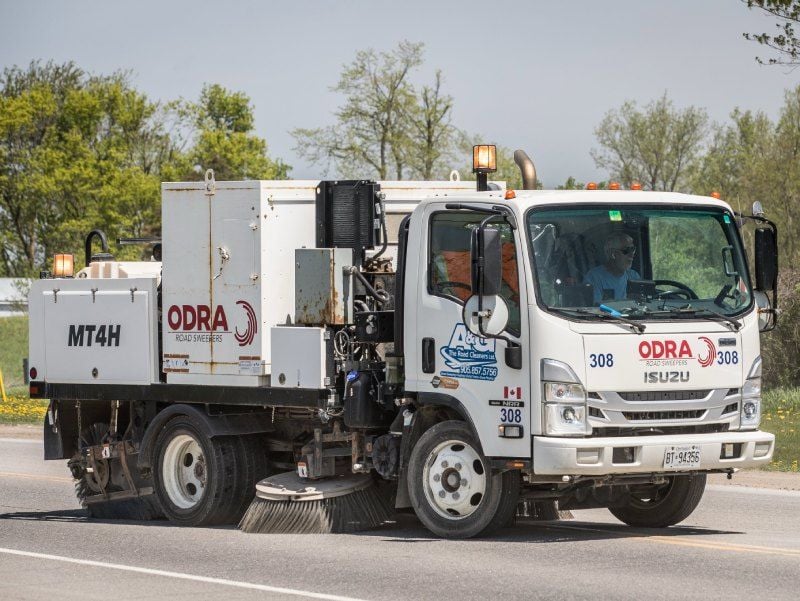
Street sweeping is the process of using a purpose-built sweeper to remove loose material from roads, parking lots and other paved surfaces. Depending on the machine and application, brushes loosen material from the pavement and curbs before it is gathered by a mechanical or vacuum-based collection system.
Professional street and parking lot sweeping can remove a wide range of visible debris, including:
- Sand and road salt left after winter
- Loose soil and dried mud
- Gravel and small stones
- Leaves, twigs and other organic material
- Litter and small pieces of waste
- Dust from construction or industrial activity
- Asphalt and concrete particles
- Material deposited along curbs and road edges
Unlike a method that simply pushes debris from one area to another, professional road sweeping collects the material so that it can be removed from the site and managed appropriately.
This makes sweeping particularly important when a street or parking lot contains enough solid material that washing it toward a drain would be ineffective or undesirable.
How Does a Street Sweeper Work?
The exact cleaning process depends on the equipment being used and the conditions at the site. Many sweepers use rotating gutter brooms to reach material along curbs and pavement edges. Additional brushes move that material toward the centre of the machine, where it can be lifted and deposited into a collection hopper.
Some equipment uses mechanical conveyor systems, while other sweepers rely on vacuum or regenerative-air technology to collect finer material. Water may also be used within the sweeping process to help manage airborne dust, although this is different from providing a dedicated street flushing service.
Professional operators consider several factors before beginning the work, including:
- The amount and type of debris present
- The size and layout of the area
- The condition of the pavement
- Traffic and pedestrian activity
- Parked vehicles or other obstructions
- Curbs, corners and confined areas
- Nearby drains and sensitive areas
- The required level of cleanliness
These considerations help determine what equipment should be used, how many passes may be required and whether another cleaning method should follow.
When Is Street Sweeping Most Effective?
Street sweeping is generally the preferred option when the primary goal is to collect loose solids. It can be used as part of routine municipal street cleaning, commercial property maintenance, construction cleanup or seasonal road care.
Spring Cleanup
Ontario winters can leave a considerable amount of sand, salt, grit and other material on streets and parking lots. As snowbanks melt, this debris becomes exposed along curbs, roadway edges, medians and parking spaces.
Spring road sweeping collects the accumulated material before it is redistributed by traffic, wind or rainfall. Properties with large winter maintenance operations may require multiple passes, particularly where snow was piled or where plows concentrated debris along the edge of the pavement.
Construction and Development Sites
Construction traffic can track soil, mud, aggregate and building material onto nearby roads. Once the material dries, it can create dust and affect the appearance and condition of the surrounding area.
Scheduled road sweeping can help contractors maintain access routes, subdivision roads, staging areas and adjacent public streets throughout a project. Sweeping may also be required before paving, line painting, project turnover or the opening of a newly developed area.
Commercial and Industrial Properties
Retail plazas, warehouses, distribution centres, manufacturing facilities and trucking terminals experience constant vehicle movement. Tires can carry gravel, dirt and debris throughout a site, while outdoor operations may generate additional dust and waste.
Regular parking lot sweeping helps collect this material before it spreads or accumulates around curbs, entrances, loading areas and drainage infrastructure.
Municipal Road Maintenance
Municipal street cleaning programs use sweeping to maintain residential streets, arterial roads, downtown areas, public parking lots and other paved spaces. Cleaning frequencies can vary depending on traffic volumes, surrounding land use, construction activity and seasonal conditions.
Fall Leaf and Debris Removal
Leaves and organic debris can accumulate rapidly during the fall. When left on paved surfaces, this material may become wet, compacted and difficult to remove. Sweeping can collect it before winter arrives or before it moves toward catch basins during rainfall.
What Is Street Flushing?
Street flushing uses water delivered through specialized trucks and spray systems to wash paved surfaces. The flow of water loosens fine particles and directs remaining dirt or residue away from the area being cleaned.
Professional street and parking lot flushing is particularly useful for material that may remain after larger debris has been collected. This can include:
- Fine dust
- Light soil residue
- Salt film
- Dried mud traces
- Fine construction particles
- Dirt trapped along curbs
- Surface grime
- Residue in areas a sweeper cannot clean completely
The objective is not simply to soak the pavement. The water must be applied in a controlled manner based on the layout of the property, the surface condition and the location of drainage infrastructure.
A professional crew can evaluate where the water and loosened material will travel, whether the area needs to be swept beforehand and whether additional collection or drainage precautions are necessary.
How Does Street Flushing Work?
Water trucks or other specialized equipment distribute water across the pavement using controlled spray patterns. The water loosens fine dirt and carries it toward an appropriate collection or drainage area.
The volume, pressure and direction of the water should be adjusted for the site. A wide municipal road may require a different approach than an underground parking structure, retail plaza or compact commercial lot.
Operators may also need to work around:
- Catch basins and storm drains
- Curbs, islands and medians
- Parked vehicles
- Pedestrian areas
- Loading zones
- Sloped pavement
- Sensitive neighbouring properties
- Active construction operations
Environmental and drainage considerations are especially important. Dirt, chemicals, oil, construction material and other contaminants should not be indiscriminately washed into stormwater systems. The condition of the site and the nature of the residue must be assessed before flushing begins.
Depending on the location and material involved, sweeping, containment or another cleaning procedure may be required before water is applied.
When Are Street Flushing Services Most Effective?
Street flushing services are most useful when a surface needs a deeper rinse than mechanical sweeping alone can provide. Flushing may be scheduled independently when the amount of loose debris is minimal, but it is often used after sweeping.
Removing Fine Dust After Sweeping
A sweeper can collect a substantial amount of dust and debris, but extremely fine particles may remain in pavement texture, along curb lines or in hard-to-reach areas. Flushing loosens this remaining material and helps leave a cleaner-looking surface.
Washing Away Light Salt Residue
After winter debris has been swept, a pale salt film may remain on the pavement. Parking lot flushing can help remove this residue from commercial properties, parking areas and other paved surfaces.
Heavy deposits should generally be collected first. Attempting to flush a large amount of sand or salt may simply relocate it and could create unnecessary pressure on drainage areas.
Cleaning Curbs and Pavement Edges
Dirt can become packed against curbs and in corners where regular traffic does not disturb it. Directed water can loosen residue from these areas, particularly after a sweeper has removed the heavier accumulation.
Preparing a Property for an Event or Opening
Commercial properties, new developments and public spaces may require an enhanced level of cleanliness before an opening, inspection or special event. Combining sweeping with flushing can improve the overall presentation by removing both visible debris and the dull layer of dust that sometimes remains afterward.
Supporting Ongoing Dust Control
Street flushing may help control surface dust in construction, industrial and high-traffic environments. The appropriate service frequency depends on how quickly dust returns, what activities are taking place and whether active dust suppression is required in addition to periodic cleaning.
Street Flushing vs. Street Sweeping: A Direct Comparison
The primary difference is the type of material each process is designed to address. Sweeping collects loose solids, while flushing uses water to loosen and wash away finer residue.
| Consideration | Street Sweeping | Street Flushing |
|---|---|---|
| Primary purpose | Loosen, collect and remove debris | Wash fine dirt and residue from the surface |
| Best suited for | Sand, gravel, leaves, litter, dried mud and construction debris | Fine dust, light dirt, salt film and remaining surface residue |
| Main equipment | Mechanical, vacuum or regenerative-air street sweepers | Water trucks and controlled spray equipment |
| Debris collection | Material is collected in the sweeper | Water moves loosened material toward an approved drainage or collection area |
| Typical applications | Roads, parking lots, construction routes, industrial yards and municipal streets | Streets, parking areas, curbs and paved commercial or municipal surfaces |
| Drainage considerations | Important, but the debris is primarily collected by the machine | Essential because water and residue must be properly directed |
| Common service order | Usually completed first | Often completed after sweeping |
| Finished result | Removes larger and loose material | Provides a more thorough rinse of the paved surface |
This comparison does not mean that one method is universally better. The right choice depends on what is present on the pavement and the result the client needs.
If a parking lot contains leaves, gravel and winter sand, sweeping is the logical starting point. If the same lot has already been swept but still has a visible layer of fine dust, flushing may provide the better finishing service.
Why Sweeping Before Flushing Is Often the Best Approach
When both services are needed, sweeping generally comes first. This sequence removes the bulk of the debris before water is introduced.
There are several practical reasons for this approach.
It Prevents Large Debris from Being Relocated
Water can move sand, gravel and litter, but moving these materials is not the same as removing them. Without sweeping, flushing could push debris from one portion of the property to another or concentrate it around curbs and drains.
Sweeping collects the larger material so it can be taken away from the cleaning area.
It Reduces Pressure on Catch Basins
Catch basins are intended to support drainage, not to receive unnecessary quantities of sand, soil, leaves and construction debris. Removing solids before flushing can reduce the amount of material travelling toward drainage infrastructure.
If catch basins already contain substantial sediment, catch basin or sewer cleaning may need to be considered as part of the broader maintenance plan.
It Allows Flushing to Focus on Fine Residue
Once larger debris has been collected, flushing can address the material it handles most effectively: fine dust, light dirt and surface film.
Instead of using water to move heavy accumulations, the service becomes a finishing process that improves the overall result.
It Can Produce a More Uniform Appearance
Sweeping can create a significant visual improvement on its own. However, fine particles can remain within pavement texture or along curb lines. Flushing after sweeping can help create a more consistent appearance across the cleaned area.
This may be especially valuable for shopping centres, commercial entrances, new developments, high-profile public areas and properties preparing for an inspection or event.
Do All Roads and Parking Lots Need Both Services?
No. Many properties can be maintained effectively with scheduled sweeping, while others may require periodic flushing rather than flushing after every sweep.
The appropriate combination depends on the property’s use, debris levels and desired outcome.
Sweeping Alone May Be Appropriate When:
- The primary problem is loose gravel, litter or leaves
- The site requires frequent debris collection
- There is little remaining surface residue
- Water use or drainage conditions limit flushing
- The area is being cleaned as part of routine maintenance
- Another phase of construction will soon generate more debris
For example, a busy industrial yard may need frequent sweeping to collect material created by daily truck traffic. Flushing after every visit may not be necessary, particularly while operations continue to generate new debris.
Flushing Alone May Be Appropriate When:
- The surface contains only light dust or residue
- Larger debris has already been removed
- The pavement requires a periodic rinse
- The drainage plan is suitable for the work
- The cleaning goal is primarily cosmetic
- A recently swept surface needs additional attention
Even when flushing is requested as a standalone service, the area should still be inspected first. If the amount of solid debris is greater than expected, sweeping may be recommended before water is applied.
Both Services May Be Appropriate When:
- A deep seasonal cleanup is required
- Winter sand and salt have accumulated
- Construction work has generated both debris and dust
- A property is preparing for an opening or inspection
- The pavement has not been professionally cleaned for an extended period
- Fine residue remains after visible debris is collected
- The client requires a higher standard of presentation
A combined service is often effective for spring parking lot cleanup, post-construction cleaning and the restoration of heavily used commercial properties.
Choosing the Right Road Cleaning Method for Different Properties
Road cleaning requirements can vary substantially between municipal, commercial, industrial and construction environments.
Municipal Streets
Municipal street cleaning often focuses on seasonal debris, roadside litter, leaves, winter maintenance material and sediment along curbs. Sweeping is typically the central service because it collects and removes solid material from the road.
Flushing may be used where finer dirt remains, where the desired level of cleaning is higher or where specific areas need additional attention. Traffic management, drainage and the time of service are important planning considerations.
Retail Plazas and Commercial Parking Lots
Customer-facing properties need to manage both cleanliness and curb appeal. Litter, gravel, cart debris and leaves can usually be addressed through routine parking lot sweeping.
Parking lot flushing may be added periodically to remove dust and residue that leave the surface looking dull. Properties may schedule a combined cleaning after winter, before a major seasonal opening or following nearby construction work.
Industrial Yards and Distribution Centres
Industrial properties may experience heavy truck traffic, material handling and ongoing dust generation. Sweeping helps collect loose debris that could otherwise be carried throughout the site.
Flushing may be appropriate for certain paved areas, but the nature of the residue must be considered carefully. Oil, chemicals and industrial contaminants require proper management and should not be washed into a drainage system without an appropriate plan.
Construction Sites and New Developments
Construction sites frequently require road sweeping throughout the project. Cleaning access roads and surrounding streets can help manage soil, gravel and dried mud tracked by vehicles.
Near project completion, flushing may be added after the heavier debris has been removed. This can help prepare roads, parking areas and paved common spaces for inspection, occupancy or turnover.
A more comprehensive construction site cleanup may also involve additional equipment and services, depending on the condition of the site.
Parking Garages
Parking garages present different challenges, including confined spaces, limited clearances, slopes and controlled drainage systems. Fine dust, salt residue and dirt can accumulate throughout the structure.
Sweeping typically removes loose material before flushing or power washing is considered. The cleaning plan should account for drainage, water collection, ventilation and access restrictions.
How Often Should Sweeping and Flushing Be Scheduled?
There is no single maintenance frequency that applies to every road or property. Some locations may need sweeping weekly, while others require monthly, seasonal or project-based service. Flushing may be scheduled less frequently as a deeper cleaning step.
Factors that affect the schedule include:
- Daily traffic volume
- Number of trucks or heavy vehicles
- Nearby construction
- Type of commercial or industrial activity
- Amount of litter or organic debris
- Winter sanding and salting
- Surrounding soil conditions
- Municipal requirements
- Drainage performance
- Property appearance standards
A retail plaza with continuous customer traffic may benefit from recurring sweeping and seasonal flushing. A construction route may require sweeping daily or whenever mud is tracked onto the roadway. A lower-traffic commercial property may need only periodic service with a more extensive spring cleanup.
The best schedule is based on site conditions rather than a generic calendar. A professional road cleaning provider can assess how quickly debris accumulates and recommend a practical combination of services.
Questions to Ask Before Scheduling Road Cleaning
Before selecting street flushing, street sweeping or both, property managers and contractors should consider a few key questions.
What Type of Material Is on the Surface?
Large quantities of sand, gravel, leaves or litter point toward sweeping. Fine dust and light residue may be suitable for flushing. A mixture of both usually calls for a combined approach.
Does the Material Need to Be Collected?
If debris must be physically removed from the site, sweeping is likely required. Flushing moves material with water and should not be treated as a substitute for collection when significant solids are present.
Where Will the Water Travel?
Drainage must be considered before flushing begins. The contractor should understand the location of catch basins, the slope of the pavement and whether any residue requires containment or special handling.
What Level of Cleanliness Is Required?
Routine maintenance may only require sweeping. A grand opening, final construction inspection or seasonal restoration may justify sweeping followed by flushing for a more complete result.
Can the Area Be Cleared?
Parked vehicles, construction equipment, storage materials and other obstacles can prevent crews from reaching the entire surface. Coordinating access before the service begins can improve efficiency and reduce the likelihood that sections need to be revisited.
When Should the Work Be Completed?
Commercial and municipal cleaning often needs to be scheduled around traffic, deliveries, public access and business hours. Overnight, early-morning or phased service may help reduce disruption.
Additional Benefits of Professional Road Cleaning
The immediate result of sweeping and flushing is a cleaner surface, but regular maintenance can provide broader benefits.
Improved Curb Appeal
Clean roads and parking lots contribute to the overall presentation of a property. This can be particularly important for retail centres, office buildings, condominiums and other customer- or resident-facing locations.
Better Visibility of Pavement Conditions
Heavy dirt and debris can obscure faded line markings, cracks, potholes and drainage problems. Cleaning the pavement makes it easier to inspect the surface and identify areas that may require attention.
Reduced Movement of Loose Debris
Vehicle traffic and wind can carry loose material across a property or onto neighbouring roads. Regular sweeping collects it before it spreads further.
Support for Drainage Maintenance
Collecting leaves, sediment and other solids from paved surfaces may help limit unnecessary material from reaching catch basins. Street cleaning does not replace drainage maintenance, but it can be part of a broader preventative plan.
More Efficient Property Maintenance
A planned cleaning schedule allows property managers to address debris before it becomes heavily compacted or widely distributed. It can also help coordinate sweeping and flushing with line painting, paving, landscaping and seasonal maintenance.
Choose the Right Combination of Street Sweeping and Flushing
The difference between street flushing vs. street sweeping comes down to how each service handles dirt and debris.
Street sweeping loosens, collects and removes solid material such as sand, gravel, leaves, litter and construction debris. Street flushing uses water to remove finer dust, light dirt and residue from the paved surface. Sweeping is usually completed first when both services are required, allowing flushing to provide a more thorough final clean.
The right solution may involve routine sweeping, occasional flushing or a customized combination based on the condition and use of the property.
A&G The Road Cleaners provides professional street sweeping, parking lot sweeping, street flushing and parking lot flushing for municipalities, contractors and commercial properties. Backed by an extensive fleet, experienced operators and 24/7 dispatch capabilities, A&G can recommend the appropriate equipment and road cleaning methods for each site.
Whether you are planning a spring cleanup, maintaining a high-traffic commercial property, managing a construction project or preparing a road for reopening, contact A&G The Road Cleaners to discuss your requirements and request a quote.
| Tags:NewsStreet Sweeping |